
How can we use rules to create a free experience?
This is a question that I consider to be central to the concept of table-top role-playing games (RPGs). They are an interactive narrative experience where the fun comes from their interactivity and the ‘freedom’ of playing make believe. Freedom is however, unfulfilling when it is devoid of structure. Without rules and restrictions there is no challenge, no focus and no direction.
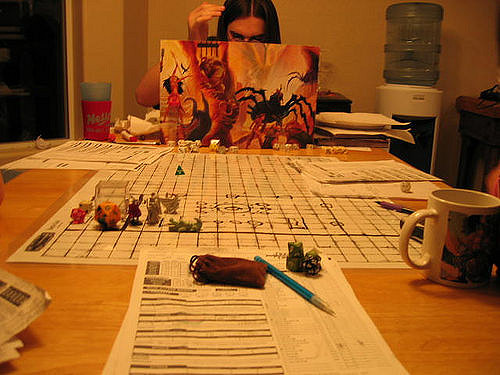
I believe that, in the context of RPGs, we enjoy wrangling our freedom from a system and engaging with the rules much more than just being given total narrative freedom. If that is what we preferred the hobby would dissolve and gamers would become novelists.
There is a point however, when rules become too much. Restrictions can impeded too greatly upon our agency within the ludo-narrative.
But ‘how far is too far?’ and ‘when do rules not go far enough?’
Rules and storytelling combine in tabletop role-playing games to, like the lions of Voltron, become something greater than the sum of its parts. This unity however, brings the concepts into competition. When poor design is employed, bringing these forces together brings out the worst of both worlds. Too many rules and we feel oppressed, too much freedom and we feel lost and without direction.
This brings us back to the term of ‘ludo-narrative’ that I used earlier. The ludo-narrative is the story that unfolds within the context of a game. More commonly this refers to video games but it still works in the context of RPGs. Building upon that, there is a concept in design called ‘ludo-narrative dissonance’. It is the symptom of having an incorrect balance of rules to story and reflects how the rules governing play contradict the unfolding narrative.
When those elements are correctly balanced however, that dissonance is avoided and you have a bittersweet game system that sits upon the mental palate in a way that is both evocative and refreshing.
“But Callum?!” you may ask “what does it mean for a game system to be evocative?” In response to this question I posit that all ‘good’ games use their rules to restrict themselves to one kind of defined experience.
Rule systems found in role-playing games truly fascinate me due to the delicate balancing act they inherently portray. Each different game has a different approach to marrying player agency with the restrictions that are required to define this experience.
I used a lot of flowering language in that paragraph so I’ll take some time to break down what I mean in my use of the phrase ‘define the experience’.
Each role-playing game worth its salt is written to evoke a target theme by facilitating certain styles of play. For a game to evoke this theme it must have that theme codified within its rules and reward systems. As a result of this, it should be impossible for the theme to be avoided when the game is played as written. The rules of the game must ‘define the experience’ of play. This is quite a bold claim but it is mirrored in games that are successful to at least some extent.
A good case study for a game that does this well is Luke Crane’s Burning Wheel and if you want to read the justification for my claim you can find my case study analysis here.
A more common example of a game that has this practice is Wizards of the Coast’s Dungeons & Dragons (D&D).
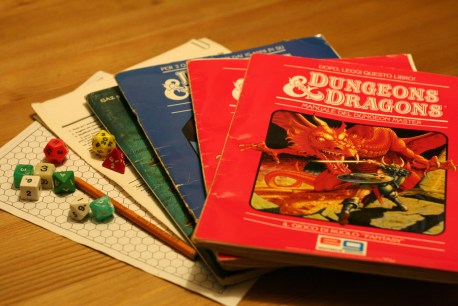
Keeping that in mind, I have to begrudgingly admit that despite its many faults, Dungeons & Dragons has a core defined experience in each of its iterations. The game D&D is about combat, killing things by lowering their health to zero. Every reward system in the game stems from this, you get experience points to level up which is the only codified kind of character growth in the game and also some sort of treasure is often left behind after a foe is slain. You cannot play D&D as it is written without having a great deal of combat (well you can but I’d argue that you aren’t playing D&D anymore; my thoughts on this can be found here). The rules restrict the game to that focus by having in depth systems for fighting which is untrue for almost everything else that isn’t combat.
This tunnel-vision approach to design is good because it supplies clear direction to the players, If they want to play a game were they fight things D&D is a good and clear choice.
What we have seen with the growth of the internet as a self-publishing tool is a boom in independent RPG systems that carve out their niches by having a unique theme that they evoke. Trying to make a system that does everything is not only impossible to do without losing quality but is also no longer up to date with the way the community uses games. Game systems are tools that are selected to match the type of story that the users want to tell. We are seeing more public examples of games changing systems as the style of narrative being told no longer fits the system in which it began. Real-play podcasts such as The Adventure Zone and Friends at the Table are recorded examples of this practice. Games are chosen based on the themes that they evoke through codified rules.


It is the purpose of rules in story telling, to evoke certain themes and style of play the provide direction to those involved.
Or at least that’s what I think. If you disagree or just have something to add leave a comment and I’ll get back to you.

 The Nuclear Alternative
One thought on “Governing the Ungovernable || The role of rules in storytelling”