
Last night while knee-deep in procrastination I stumbled across the music video of Unknown Mortal Orchestra’s ‘Hunnybee’.
It’s not the type of music that I normally listen to but the art style and visuals present in the video got me thinking about how often we see trains as a setting in literature and media.
Trains represent a unique bubble within which a story can progress dynamically without being distracted by changes in scene. In the above clip, we see a peaceful vista of nature that the train travels through, carrying the silent focus and her luggage through this terrain. This scenery, however, is almost exclusively witnessed from the train itself, a consistent setting that until the very end, contains the story. Even when the camera briefly departs from the train itself, it is only establishing context to give us a sense of its movement. The story never ceases to have is core focus upon the subject of the cabin.

Though not touched on in the video of ‘Hunnybee’, trains have become a vital tool in story-telling to contain a narrative and drive tension without exacerbating feelings of claustrophobia.
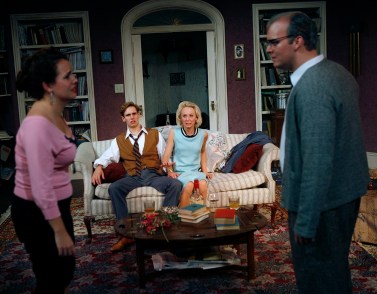
While the train is in locomotion, the setting is kept static. Characters are unable to embark or leave, focusing the narrative on their interactions. Unlike works of fiction contained to one space (such as ‘Who’s Afraid of Virginia Woolf’) the audience is left a release from the claustrophobia as the train moves and the vista changes. We are given an illusion of movement even though, like the characters, we never leave the space of the carriages. This space is still functionally identical to a single room.
The use of the train as a narrative device to place character interaction in the forefront is expertly wielded by Agatha Christie in her famous novel ‘Murder on the Orient Express’. In this book, the set up of the characters and plot is interspersed with travel and stops at various locations surrounding the train. However, the action and the core mystery takes place completely within the train itself.
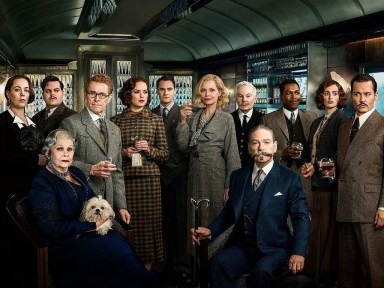
Other methods of transport can still be utilised to demonstrate these story elements but I would argue that trains are the most effective. It is true that you can have chance meetings in a taxi, aeroplane or, (as shown at the end of the movie ‘Sliding doors’) an elevator. I would argue however that trains are special case from how they are historically presented in literature and from their accessibility.
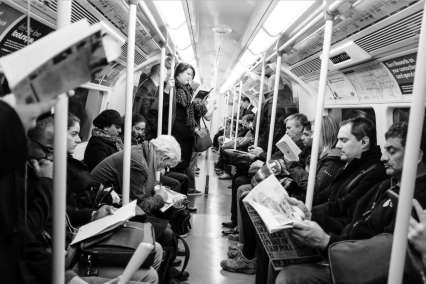
Trains have often been presented as a location that readily breeds interactivity. It is more of a united, shared space. Everyone on a train has to put up with the same transit experience, other vehicles do not carry the same connotations. Each train carriage is its own contained community, a community with very little resources beyond its characters. No other transit method so readily provides the potential of community or character-driven drama.
Trains are unique in what they provide as a literary tool and are the ultimate example of transit in storytelling. It provides a consistent setting that is closed, yet feels open, allowing us to experience tension without being made uncomfortable.
I hope this has been somewhat interesting and isn’t just a self-indulgent expression of some bizarre, pseudo-intellectual train fetish that I’ve unconsciously developed. Drop a comment and let me know what you think about trains in stories or to let me know about a topic you find interesting that I could try exploring.

 The Nuclear Alternative