Ourselves as Barriers

In every aspect of our lives we come up against setbacks, thing and events that ultimately wall us off from success.

These metaphorical barriers that block our paths forwards come in a multitude of forms from painful bureaucracy to more physical issues such as the weather or an inevitable and all too common train delay. Any obstacle to success can be viewed as a problem requiring a solution, it is very rare that something cannot be solved or at least mitigated. The big and critically introspective question you have to ask yourself knowing that there can almost always be a resolution whenever you do come up against a barrier is ‘am I allowing this problem to exist?’.

brick-158629_960_720

I observe predominantly in myself I admit that any small issue that slows down a predicted timeline or plan opens up an opportunity to become slack, blaming lack of progress on the external problem. Slackness in this instance should not be interpreted with its usual negative connotations but more of as symptom or result. When you are juggling deadlines and projects often something has to give or be delayed and a small slowdown in management creates the space for that delay to occur in a manner we can convince ourselves is unavoidable.

For me at least this is more of symptom of a different issue rather than its own contained thing. It all seems to be the result of poor prioritisation.

A study into the pursuit of scholarship in the medical profession published in the Medical Education Journal identified that aside from motivation the other two main factors that inhibited progress were to do with time, time fragmentation and prioritisation. Time fragmentation refers to only having sporadic opportunities to make progress on the task in question and prioritisation as you would expect refers to the the relative importance of different tasks that compete for your time. The conclusion of the study  was that productivity is more complicated than just the number of hours available in a day but required structures within institution to support and encourage progress.

This becomes an issue in start-up initiatives even on the microscopic scale that I am involved in. There are no structures in place to support productivity. Such a small idea just doesn’t accommodate it.

With no structured heirachy of importance it falls to us to prioritise within our own workloads as time simply isn’t enough. Its all too easy to label everything as of equal importance but that just leads to an amount of tasks that feels insurmountable regardless of how simple they may each be individually. This inevitably leads to a build up of stress and a feeling of hopelessness which ultimately inhibits productivity.

At this point of stress is where we look for those barriers as excuses to cut out chunks of our tasks and brings us back to the intial step of no lrogress being made but it feels better this way as its ‘not our fault’.

Most of our barriers only exist because we allow them to and the only way to make progress is to critically restructure they way we think about our work.

The paradox of experience in youth leadership

Leadership is a multi-faceted concept.

We tend to, in our leaders, value both wisdom and confidence, patient knowledge that typically comes only with experience. On the other hand  there is a constant search for innovation, radically new ideas and approaches are being sought after and glorified almost to the point of being gimmicky. The ideal leader has to embody these to ideas in some bizarre equilibrium.

Youth leadership especially is its own kind of ungainly beast.

chimera-2027203_960_720
Youth Leadership especially is its own kind of ungainly beast

The young leader is typically viewed as perfect for those ideals of innovation and adaptability. The lack of the experience everyone prizes so highly means the young leader is less restricted by preexisting ideas and past experiences.

That lack of experience however is potentially disastrous.

Experience and wisdom breeds dependability and security, both of which are highly important to the overall success of any venture. Youth leaders almost by definition do not have these traits of wisdom and experience. Their first big project though necessary in developing those qualities, is likely to either outright fail at what it attempts to achieve or be significantly flawed. As a learning and growing experience attempting to lead while young is great as a learning opportunity but the overwhelming and oppressive feelings of stress conjured as events inevitably do not resolve as planned can be difficult to overcome.

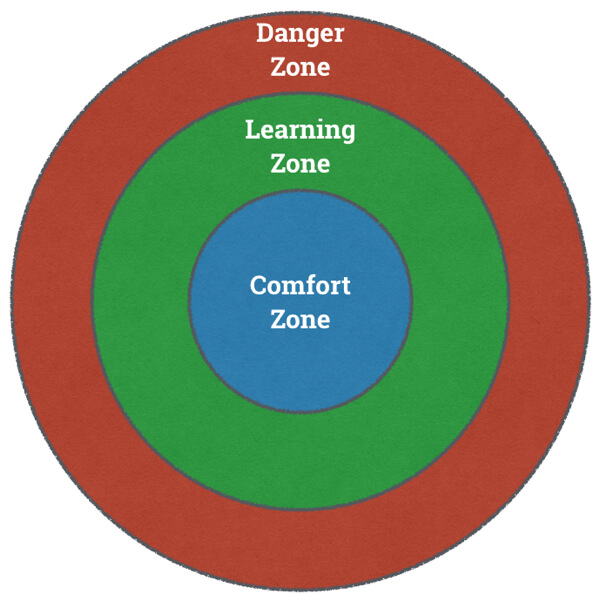
All kinds of leadership are stressful, such is the nature of the action. As a young person however that stress compounds with the newness of many aspects of life. Youth is a time of firsts and firsts are stressful enough without the addition of leadership responsibilities and thus it compounds. Newness and stress can be positive factors, without the skill and courage to take the leap outside of our comfort zone, we can miss out on important opportunities for advancement (Kloefkorn 2015). To stay healthy however we need to travel back into our comfort zones to recover before stretching ourselves again. Its almost like physical exercise, we need to work hard but also rest and recover. In leadership and especially in innovative entrepreneurship, it can be difficult to step away for those necessary moments of recovery.three-leadership-zones

Youth is full of avenues of stress and newness that cannot be abandoned or neglected. These things range from personal development and discovery to full time study and coming to grips with more adult responsibilities. On their own these sources of stress are fine, adding leadership commitments can however be risky. It becomes easy to feel trapped in the place of stress and discomfort known as the danger zone, a place so far beyond where you are comfortable that it becomes harmful. The danger zone is the place where you are stretched too far, over-stressed and unable to lead (Ambler 2015) and in youth leadership I see an enhanced risk of entering due to lack of experience and commitment.

The skills of a youth leader in innovation and adaptability are profound but it pays to be cautious of the dangers brought about from a lack of experience.

The souring nature of authoritative relationships.

First and foremost I’ve had a bit of a long week.

It’s been a little rough with the return of university syncing up with some personal issues but hey, what canya do?

What has been on my mind recently in light of this is the nature of relationships, specifically how they can help one deal with stress and to grow but also how they can sour so quickly.  Recently for me those two separate aspects of interpersonal connections have been magnified by the presence of an authority figure who demands a level of social bond and trust.

This demand for trust is something I can understand even despite my misgivings, some tasks require it to move forward effectively, especially in the academic setting within which I have experience. Though this trust is required, things start to fall apart when it is demanded. I feel that to have the kind of positive relationship that results in faith and openness there must be some semblance of equality involved. This equality does not correspond to levels of management, that is a power disparity that must be accepted. The type of equality to which I refer is all about respect.

download

In examples of genuine leadership there is a level of respect between the leader and their followers. The followers respect the authority of the leader but both parties respect the validity of each-others’ opinions, at least considering them even if there is a disparity in how educated one party is in the subject a hand. Leadership is about guidance and cooperation, when communication no longer results in an exchange of information but instead a situations where only one side’s opinions are treated as valid, it becomes solely an authoritative relationship. All trust is lost when those who follow no longer feel that that trust is reciprocated.

Alienation from authority is an all too common occurrence that leads into the breakdown of respect as resentment builds within those who operate and learn under this authority. It further compounds as resentful individuals share their feelings with other resentful followers and from that consolidation acts as justification that reinforces the anti-authoritarian ill will.

In my personal experiences with this my bitterness towards this authority in currently being exacerbated by the hypocritical insistence that the authority figure is leading and that they are teaching me the principles of leadership. It is true that I have less credibility on the topic than they do but surely its a red flag when dogmatism is the method through which criticism is dealt with?

This has all been about my experiences and feelings surrounding this topic and it would be very hypocritical if I didn’t now state that I am open to correction and criticism. On that note I’d love to hear what you think, what are your experiences with leadership devolving into authority?


A Passion for Change || A short chat with the incredible Rob Caslick

AAEAAQAAAAAAAAvAAAAAJGIxYjhhMzFmLWE0NjUtNDdjYS1hMzJmLTBjMTc1MDMwNDcxYQ

Rob Caslick is an engineer, social entrepreneur and one of the founders of Two Good, a business that provides food and work for those in need. Rob uses the problem-solving mind-set he developed while studying engineering to tackle social issues in the community. His initiatives have a focus on the power of food to break down barriers and bring people together. His business Two Good provides work for women at domestic abuse shelters and caters good quality food for people sleeping rough.


Where do you think you first begun the journey to become a leader and where you first started grappling with the concept of leadership?

Leadership wise I was in the navy so I had that fairly militant and hierarchical leadership training and that kind of worked quite the opposite for me because that’s not who I am, that’s not how I operate. It was more of I played the game and I appreciate respect to people for the people that I employ for instance, I learnt more around respect than I did around thinking that I’m in this position because of my rank as opposed to who I am. I think that really shaped me if anything as a leader, just knowing and appreciating the different types of managerial roles where you know a flat kind of management structure which I prefer or the very structured military like leadership.

I was thrown into the structured military leadership and it just didn’t fit well with me but that was more a rude awakening and I thought ‘hang on this is not how I like to do things by example and not have people follow me because I was a certain rank but follow me because I believe in what I’m doing, the belief that I have their best interests at hand’. I think that’s when I, that’s how I started to learn about leadership and what I thought of what leadership should be like.

Where do you think the drive to act and enforce change comes from for you?

I think its confidence I think the first I think it happens when you do something small first and then realize ‘hey I can do this’ and then now you see problems that you think well you know this person and you know this person and we can put these few things together and then all of a sudden, you’ve got a team to solve the problem. I don’t think I’m a great leader but I kind of lead by example but and I’m quite passionate about what I believe in and I think that passion is addictive. When people can kind of see that and then follow you and you know someone who is passionate you can quite easily follow. That’s one of the things that I’ve managed to do, [have] an absolute passion for something and then people think ‘hey I also believe that and I’m going to jump in and help’      

AB5I0498_NikkiTo

What advice would you give yourself or someone else who was contemplating starting a social enterprise?

Don’t do it stick to engineering you’ll make more money. I think just it’s not going to be easy but it’s always going to be worth it so I don’t think I’d do anything different. I have of course made many mistakes but I’ve grown from that so I don’t know if I would tell myself is to do anything than kind of have faith that this is the right path and that things are going to turn out okay. When you’re starting something up that’s quite new and quite difficult you question yourself all the time ‘what the hell am I doing? Am I crazy?’. Just think about the bigger picture and having faith and courage that you know this is my path and I think I’d tell myself that.

You just have an idea and I think the saddest thing is an idea that’s not executed, even how stupid it is you’ve just got to start, you’ve just got to have a crack and then who knows? I’ve had plenty of crazy ideas that didn’t work but you don’t know until you have a go, sometimes it doesn’t work but you have this insight that says, ‘but hang on, lets tweak it here and this could actually work’.


To find out more about Two Good check out their website here.


The Buzz Around The Coffee Ground

If you are anything like me you rely on coffee to function.

Many mornings have been saved with the addition of a caffeine hit to be awake and aware. This amazing beverage has become something of a cultural phenomenon particularly in Australia with thousands of independent cafes and retailers catering to a loyal clientele base who often feel a sense of loyalty to their preferred baristas and blends.

In terms of sustainability the coffee business has come a long way with the introduction of recyclable cups as well as the introduction of keep cups for those people who like to go that little bit further with the environmental conscience so they can feel superior to the rest of us. Using recyclable and keep cups over polystyrene or plastics is only a small action on an individual scale but when you realize that one busy cafe alone can sell over 800 cups of coffee before 10am its clear that it really stacks up.

That’s why sustainability initiatives that involve coffee are so elegant, they don’t need to be big and they don’t need to be fancy. One small change can have a huge impact when in is replicated thousands upon thousands of times each morning as we try to keep ourselves awake. For this very reason, I am very excited about the emerging idea of re-using spent coffee grounds.

Uses of spent grounds:coffee

Nitrogen rich compost

high drainage fertilizer

-Mushroom farming

Bioactive compounds that can be used in skin care products

Biochar

anaerobic digestion

Spent coffee grounds are ideal for re-using as the high temperature conditions in the brewing process partially sterilize the grounds and since spent grounds are usually stored separately to regular waste contamination is low.

Some cafes and most prominently some cafes of the chain store Starbucks already have programs where spent coffee grounds are given out to customers for use in their gardens as either compost or fertilizer. This is a simple and effective way to re-use spent grounds but there simply aren’t enough compost heaps to take the annual 3000 tonnes of coffee grounds that is produced annually in Sydney alone.

The trend in Australia is also to avoid chain cafes like Starbucks in favor of independent cafes so if anything is to become effective it needs to be more widely organized across independent businesses. The good news is that 77% of businesses are interested in coffee ground recovery programs.

One of the more interesting and exciting applications of used coffee grounds is in power generation and heating. As it is organic matter it can be used along with other biomass and put through the process of anaerobic digestion.

Anaerobic digestion is the process undergone by biomass when it breaks down in a deoxygenized environment and it results in the production of biogas. Though expensive and difficult to set up biogas can be burned to produce electricity and heat buildings and unlike fossil fuels it is carbon neutral. This idea is also feasible in Melbourne as a biogas plant in Federation Square.

Biogasholder_and_flare
Biogas plant

Another great and surprising use for spent coffee grounds is in skin care cosmetics. Coffee grounds contain de-oxidizing chemicals that are found in skin care product and is also great for exfoliation and is also reported to have anti-wrinkle properties.

These benefits are partially due to the bioactive compound caffeine which is unsurprisingly very present in spent coffee grounds. Caffeine tightens the skin and it also can restrict blood vessels reducing the prominence of puffy eyes.

This use interests me in the sense of it being a commercial product that is sourced from an otherwise wasted product. It adds a financial incentive to being more sustainable and also allows for the possibility for a business to be run off the back of this concept.

If you want to check out ways you can make your own skin care products from spent grounds you can check that out here.

We should think about small scale sustainability ideas. This was all about coffee but the same is true for any concept. Any small idea can have a big impact if its shared enough and practiced by enough people. If you think the ideas I’ve discussed in this are feasible you should checkout PlanetArk and register your interest. If you have an idea for a small sustainable project that you find interesting let me know and leave a comment, I would love to hear what you think.


Introduction

I’m not sure how you’ve ended up here but ‘welcome’ i guess?

I run this blog partly as part of my university degree but I try to make it as interesting as I can. From time to time I’ll also write a more personal opinion piece.

Hang around if you want to read about science and adaptive leadership theory.